Skip to content

Free online dyscalculia games for number sense

Six free math games in the browser, each built on one of the number skills that children with dyscalculia most often find hard: seeing small amounts at a glance, ten frames, comparing, the number line, adding and taking away, and remembering numbers. No account, no download, no ads.

Updated

Play now: free math games

Ten questions a round, every level from the Dyscalculia.io program. Each game ends with stars and the questions to try again.

Which number skill each game practices

GameSkillWhat your child doesLevels
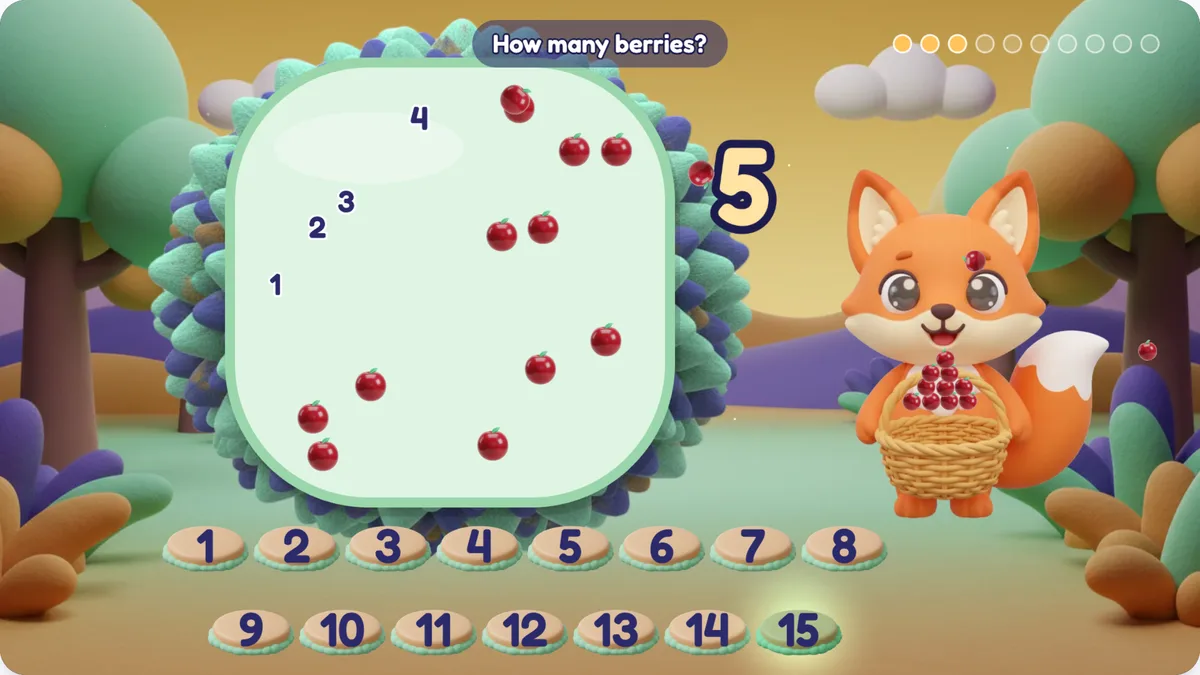
Berry CountCounting at a glanceBerries pop up on the bush: how many can you see at a glance? Tap the number and watch them hop into the fox's basket one by one. On flash levels a leaf curtain hides them quickly, and a miss counts them out for you.9
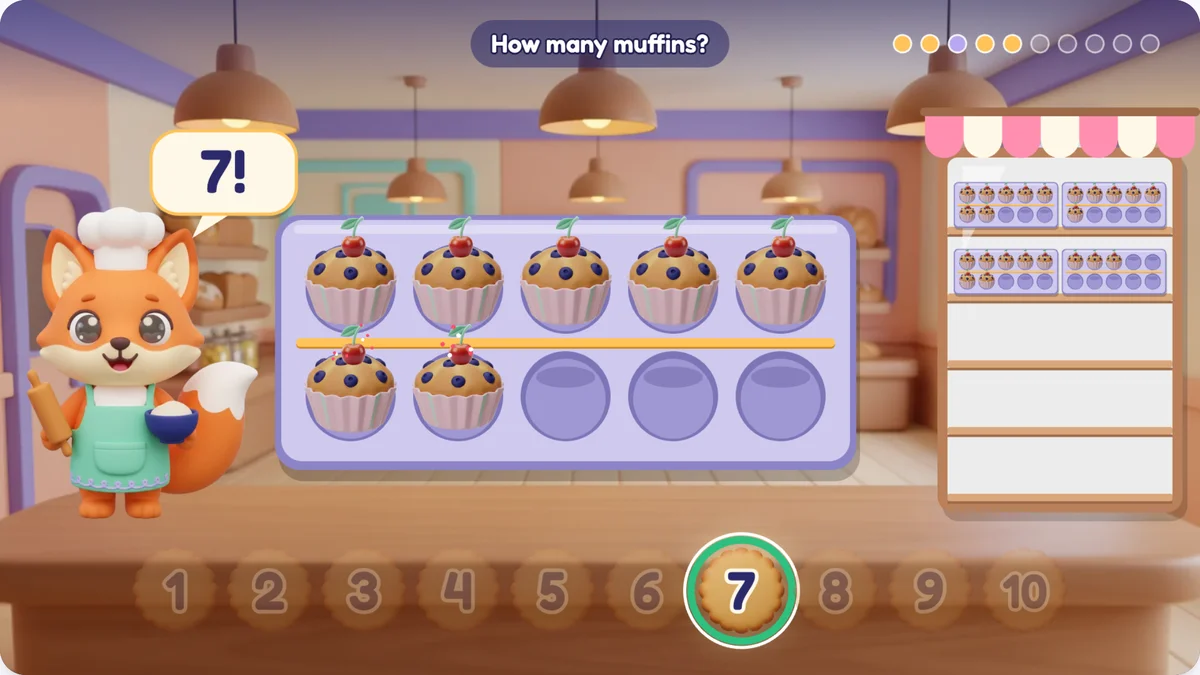
Muffin TenTen framesThe fox's muffin tray is a ten frame: count the muffins in two rows of five and tap the number on a cookie. A miss counts the muffins out on screen (5 and 3 more = 8), and every finished tray goes into the shop window.2
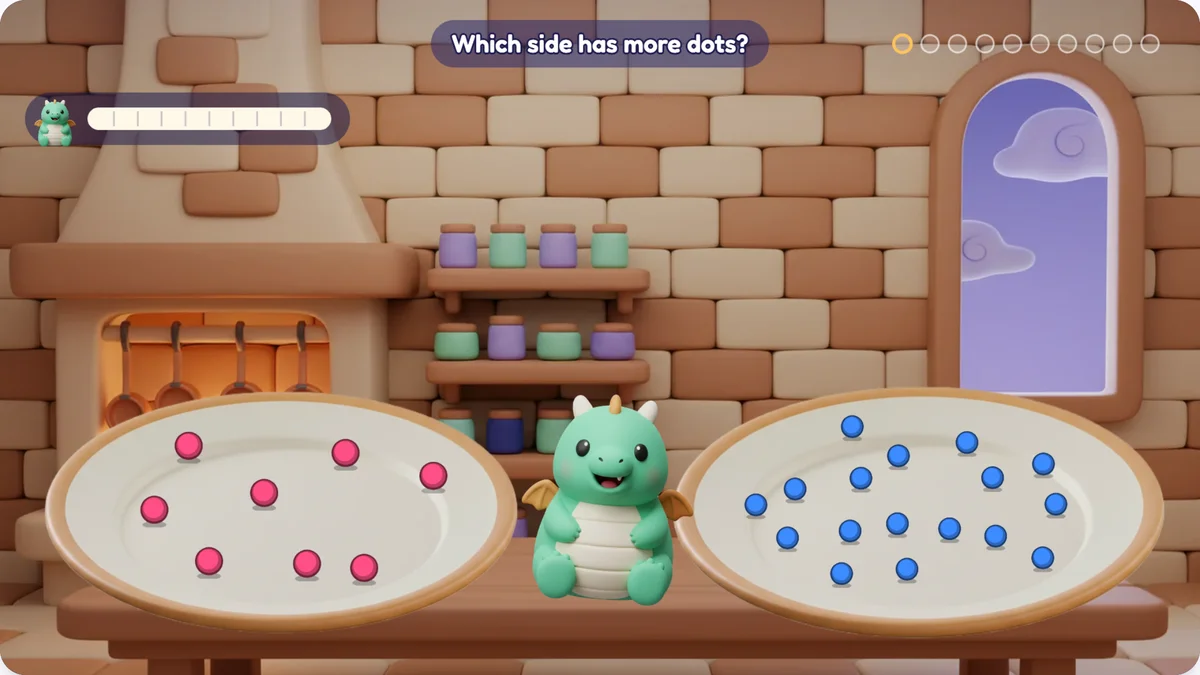
Dragon SnackComparing numbersA hungry baby dragon always wants the bigger snack: tap the cookie with the larger number, or the plate with more candies. Miss, and both amounts are shown side by side (7 < 13) before you try again.10
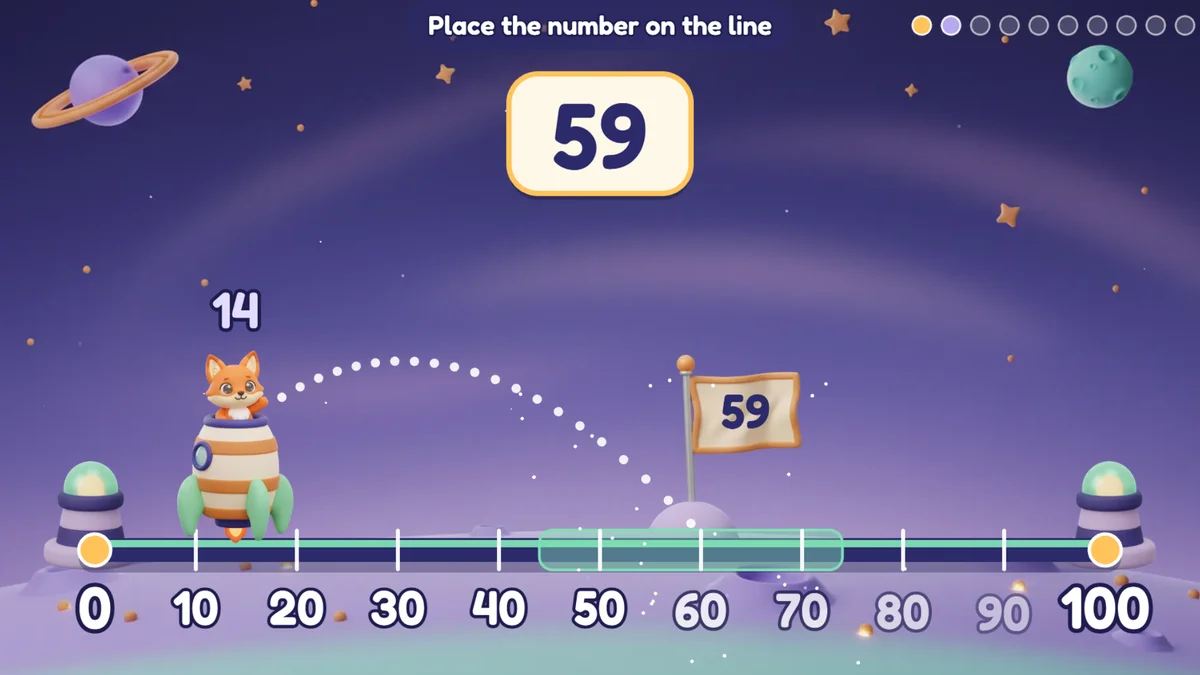
Rocket LineNumber lineHelp the fox land its rocket where a number belongs on a line from 0 to 10, up to 0 to 100,000. Miss, and a glowing guide flies to the right spot while the line shows its tick marks.5
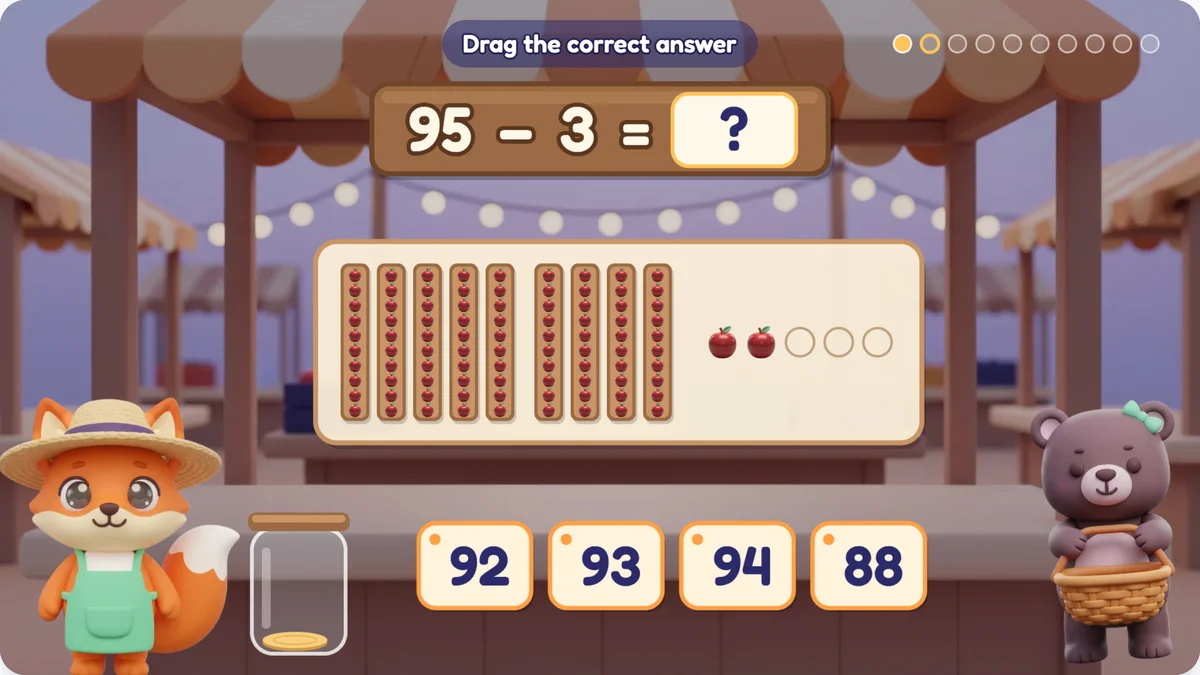
Fox MarketAddition and subtractionHelp the fox run the fruit stall: add two trays of apples, or work out what is left after a customer buys some, then drag the right price tag to the sign. A miss counts every apple with you, one by one.9
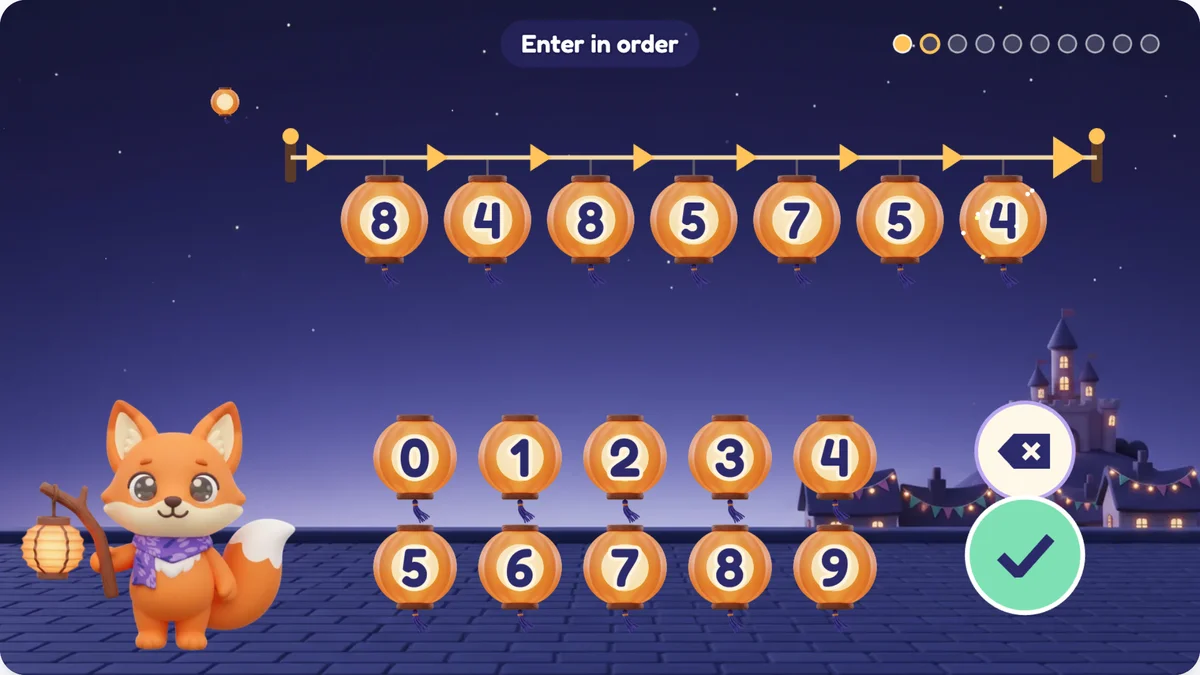
Lantern MemoryNumber memoryPaper lanterns float up one at a time, each with a digit. Remember them, then light the fox's lantern string in the same order; after a miss the right sequence appears under your answer.5

What makes a good math game for dyscalculia

Dyscalculia is a lasting difficulty with number sense: the feel for how many things there are, which of two amounts is bigger, and where a number sits among the others. Children with dyscalculia often count on their fingers long after their classmates have stopped, mix up which number is larger, and find that facts they learned last week are gone again. A useful game practises those basic skills directly, with numbers and quantities the child can see.

Four things matter more than graphics. The game should show quantities, not only digits, so the child links the symbol 7 to seven things. It should start small and grow step by step, because a child who is still unsure about 5 learns nothing from sums up to 100. It should show the right answer straight away after a mistake, in a way the child can count or see. And it should be short: ten questions a round, so practice can happen on most days rather than in one long session.

How the free games relate to the Dyscalculia.io program

Every free game uses the same rules as an exercise in the paid program: the same number ranges for each level, the same way of choosing the numbers and the same idea of what counts as correct. The difference is around the games. The free games are single rounds of ten questions you pick yourself and nothing is saved.

The program builds a 5 to 10 minute plan each day from the results of the free dyscalculia test, brings back the items a child got wrong after one, three, seven and thirty days, and makes each block easier or harder depending on how the last one went. With a free account level 1 of every game in each age world is open; the full program costs $9.99 a month or $39.99 a year.

How to use dyscalculia games at home

Pick the game for the skill your child finds hardest. If you do not know which that is, the free test takes under 5 minutes and shows a profile of five number skills. Start at level 1 even if it looks easy: success early on matters for children who already expect to fail at maths.

Play one or two rounds a day rather than many at once, and sit with younger children. Say the numbers out loud together, and after a round look at the short list of questions to try again. Move up a level when a round feels easy, and drop back when more than three answers go wrong.

Not sure where to start? Take the free dyscalculia test — five short games, under 5 minutes, no account.

Dyscalculia games: questions parents ask

Are these dyscalculia games really free?

Yes. All six games are free to play in the browser, with no account, no download and no ads. The paid part is the Dyscalculia.io program, which adds a daily plan, spaced review and saved progress.

What age are the games for?

Most levels suit children from about 4 to 12. The first levels of each game work for preschool and early primary children; the last levels use bigger numbers and shorter display times and suit older children, teenagers and adults who want to practise too.

Do these games diagnose dyscalculia?

No. They are practice games. A screening test can point to a possible difficulty, but only a qualified professional can diagnose dyscalculia. Our free test is a screening, not a diagnosis.

Which game should my child start with?

Start with the skill your child finds hardest. Young children usually begin with Berry Count and Muffin Ten; children who can count but mix up which number is bigger begin with Dragon Snack; older children often need Rocket Line and Fox Market.

Do the games work on a tablet or phone?

Yes. They run in any modern browser and work with a finger, a mouse or the keyboard. On a phone, turn it sideways for the biggest picture.